
Donald J. Trump, the Republican nominee for President of the United States, has disrupted the status quo and realigned the political paradigm. In creating a movement, he has done something good. He has stood up to and ultimately defeated an out-of-touch Republican establishment, while reigniting the passion of a despondent Republican base. He spoke up for millions of previously unheard Americans who were left behind by globalization and technological change. Most importantly, though, he utterly destroyed any conception of political correctness that we may have had.
Yet Trump’s erratic candidacy has shown the faults of a movement founded on a single larger-than-life personality and unmoored by ideological fault lines. His lack of judgment and discipline, as demonstrated by his occasionally unhinged performances and inability to resist making childish insults, is concerning. His lack of character, as evidenced by his beyond-the-pale comments about women, is unsettling, if not disturbing. Trump likes to talk about how he is only a messenger for a movement, but his faults as a messenger are holding back said nascent movement.
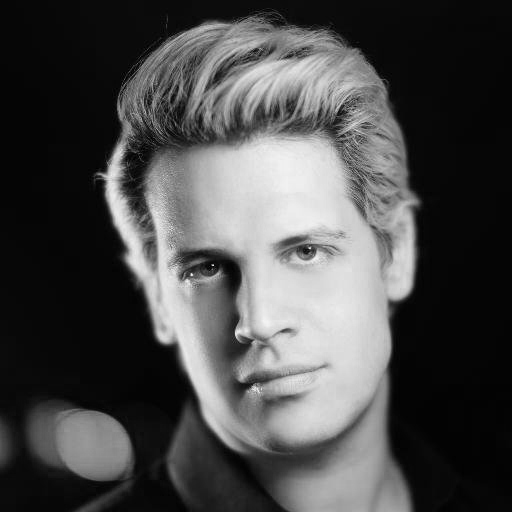
Milo Yiannopoulos
Enter Milo Yiannopoulos. He is every bit the character that Trump, whom he calls “daddy,” is. The key difference, however, is that Yiannopoulos is personality driven by principle. Whereas Trump has incoherent to nonexistent positions on most topics (except for the Mexican border wall), Yiannopoulos has fleshed out a contrarian yet sensible ideology. The manifestation of a political realignment, he is possibly the most effective champion of classically liberal values such as free speech against the tide of illiberalism that dominates college campuses and the ideology of the regressive left. Indeed, the movement that Trump inspired, in its manifestation as Yiannopoulos, has surpassed the impact of Trump himself. Yiannopoulos, not Trump, is the one emboldening principled conservatives to rise up for deeply held principles.
For too long, the battle against the regressive left has been asymmetric and unwinnable. The radical left on college campuses held the moral high ground and expressed consistent outrage at alleged injustices and oppression. Their Alinskyite tactics worked, and conservatives were cowed. We lived in fear of retribution—in fear of reciting unpleasant truths and harsh facts about reality that offended leftists. Traditional values were left without a visible and effective champion.
Yiannopoulos’ success arises from his exploitation of Trump’s obliteration of the Overton window. No longer constrained by the anti-conservative standards of political correctness, he is able to make his points in a brightly intelligent, devilishly clever, and hilariously “trollish” way. Employing humor, flamboyant language and presentation, and harsh, often personal ridicule, Yiannopoulos has changed the way that conservatives can fight—and win—against their illiberal opponents. He has taken the methods of the radical left, especially humorous dismissal, and redeployed them to great effect. At Dartmouth, Yiannopoulos declared, “The most effective, powerful weapon you have is comedy. The left has been very good at it for decades, but the tables are turning.”
Yiannopoulos’ forceful rejection of today’s young radicals and revolutionaries is long overdue. The likes of Black Lives Matter are laughably attempting to claim the mantle of the Civil Rights movement. The adherents of identity politics and the new genre of pronoun politics have reached new highs (or lows) with the ease at which they take offense and label dissenting ideas racist, sexist, classist, or any other obscure “-ism” they can conjure up in their twisted minds. Disproven Marxism based on a false humanitarianism and misguided empathy remains shockingly prevalent. From the right, a fierce repudiation of their weak and regressive ideology is the only reasonable response.
Conservatives have pushed back against the radical left, with limited effect. Take the creeping influence of third-wave feminism, which is spilling over to mainstream society despite its incongruence with biology and reality. The ideas of distinguished scholars such as Camille Paglia and Christina Hoff Sommers, which stand for true equality between the two genders in light of biological differences, have been around for quite some time. But unfortunately, they seemed to lack currency until Yiannopoulos came along. At Dartmouth, Yiannopoulos integrated their serious scholarship into his entertaining presentation and proved that one can be intelligent and incisive against the left while maintaining a joyfully humorous façade. Perhaps that is the best way forward.
When it comes to the broader discussion on Western civilization, conservatives have been in retreat until Yiannopoulos. The left’s consistent efforts to impugn the West—and white men more broadly—ended up taking a toll. For decades, Western canon has been falling out of favor at colleges and universities as leftist luminaries questioned the utility of such a hegemonic and imperialist worldview. To add insult to injury, they have had increasing success with implementing requirements on diversity and inclusivity. It is for these reasons that it is so important that we have Yiannopoulos on college campuses today.
The radical left would have you believe that America is the most racist, sexist, oppressive, imperialist, and least free society in the history of the world. Built upon slavery, colonialism, and exploitation, as well as numerous war crimes and human rights violations, America is only exceptional in its awfulness, or so the narrative goes. Yiannopoulos himself is not American, which makes his points that much more salient. An Englishman, Yiannopoulos has seen the decay of continental Europe as well as his own country’s reclamation of her sovereignty by means of Brexit. He sees in America the greatest hope for civilization and the most exceptional nation in the history of the world. We would do well to remember these uniquely American aspirations.
As fierce a critic of leftism and a defender of Americanism as Yiannopoulos is, he does perhaps his greatest service in his contribution to the practice of free speech. The left poses its greatest threat not by its regressive and delusional nature, but by its hypocritical illiberalism. As we well know, the left touts diversity and inclusion, but means something entirely different. Its goal is to fill certain demographic buckets, usually “underrepresented” racial and gender groups, in an ideological monoculture. Any true diversity, which is any deviation from the ideological orthodoxy, calls for the greatest offense and outrage. In a world of trigger warnings and safe spaces, Yiannopoulos’ unconventional and controversial speech does us all a service.
Critics of Yiannopoulos like to point to his polarizing and irreverent style as counterproductive to advancing classical liberal values. However, it is precisely his tendency to force timid, insecure social justice warriors into a fetal position that ensures his efficacy. Indeed, Yiannopoulos has galvanized free speech advocates who may not agree in the slightest with him. Following the left’s asymmetric standards of conduct—one set of rules for conservatives and one set of rules of rules of Alinskyites—was a losing strategy from the beginning. If truth is treason in an empire of lies, then the massive overreaction from the left signals that Yiannopoulos is on the right track. The process of forcing the left to confront the absurdity of its own ideology is as painful as it is necessary, but at least Yiannopoulos makes it fun for the rest of us.

Polarizing the argument prevents people from debating in terms of grey.
Which is how it should be to begin with.
Excellent. Tip of the ol’ cap to The Dartmouth Review for publishing this.
Yes, I’m shocked that this came from the cesspool that American universities have become.
Hats off, Dartmouth. Remain courageous
EXCELLENT!
Great article! It’s not that I want people to agree with Milo (actually I do), but I want them to listen to a different point of view without resorting to blaring airhorns, and overutilzing and misusing the words….Racism, Sexism, when Milo is as far from that as you can be. He is a staunch defender of freedom of speech, and for that I laud him.
Just finished reading an article of a rabid lefty who joined Gab for lulz. Mentioned he was pleasantly surprised it wasn’t the Mad Max-style free-for-all he assumed it would be. Said he even had a few reasonable conversations with people. All people need to do is open their ears and not rely on the hearsay they pick up from their equally ignorant friends.
Quiet ironic… How the Left’s continued silencing of their opposition’s free speech and differing view is nothing more than the very totalitarianism society they claim to resent.
The Left has produced some of the world’s worst despotic regimes and human rights abusers.
No spit! Communism killed 100 million people in the 20th century….
That’s why I now call them the Totalitarian Left. Spread the word.
Jack Dorsey won’t like this. It actually makes sense.
Check out the INSANE footage of the anti Milo protest @ DePaul University. https://youtu.be/vn-l3C8kn94?list=PLoQTg3myRNTeBbH_wcuw6VEX77ZiFst8H
Love! Saw Milo @ Dartmouth on internet – your analysis is exactly right. Good for Dartmouth in “allowing” Milo and his campus organizers to speak..Keep it up! Am a “Seven Sisters” graduate!!! Yes! True!
MILO IS A HERO FOR US!
Looking forward to seeing him at UW in January
I noticed watching the various shows of the Dangerous Faggot tour just how quiet the leftists have become in the last few shows.
Being stood up to, humiliated and laughed at seems to have shut them up. It was a remarkable moment when I first heard the counter-chant of “Trump! Trump! Trump!”
It’s the voice of ordinary, decent Americans who have had enough of the faux moral superiority of the Left.
I noticed this too, but I thought it was because he was going to more conservative schools.
When I first read Milo’s comments, I did ‘fall for his ability to be honest.” At least my definition of honest. The only thing that connects people is to be honest with each other. If you disagree with a premise, it will not lead to an opposition or movement to ‘change’ or eliminate ‘free speech,’ but to accept that discussions will produce differences of opinion, that doesn’t mean “war” against the person(s) who disagree/agree. My philosophy professor once made a statement I will never forget:
” As long as there are at least two people on earth, you will eventually come to a disagreement.” Keep presenting yourself as a person who may not agree, but you are willing to hear both sides. That’s a winner.
Incidentally, I thought your article on Milo was an interesting and profound depiction of his character.
Hurray for Milo.
Milo is a voice for young conservatives who have been to afraid to speak up with fear of being crucified by a rabid left wing movement.
Milo is a fame whore who is basically like a radio shock jock. He says anything to be provocative but stands for nothing.
And if he was a leftist he’d be an icon. That’s how it usually works.
You have clearly not listened tk a word he has said. And we all know it.
Is it bigotry that stops you? Or merely a closed mind?
– fame whore
– shock jock
– say anything to be provocative
Yes, all of that is true, but he ALSO makes many of the most intelligent and factual arguments being made by political speakers at universities. That’s a low bar, admittedly, but the leftist extremists are so dishonest and irrational, Milo is a god by comparison.
Have you watched any of his youtube university appearances? Because if you had, you wouldn’t have just said what you just said. So I’m quite sure you don’t even know what he says in his speeches.
Milo will say anything contrarian simply to be contrary and provocative whether he believes what he’s saying or not.
No, that would be you. You are trolly, but without intellect behind it.
Try again.
Because we, unlike the Totalitarian Left, will listen once you decide to actually say something.
THAT is what Milo brings. Nut… ooops.. ovary up, or shut up.
Give an example, please. B/c I don’t believe based on your posts that you’ve ever heard anything he’s said.
As a leftist, I still view Milo as a hero. I am well aware of what a lot of people on my side seem to stand for, and I’m against it. The left used to be a world of tolerance, I really have no fcking clue where all of that went.
Classical Liberalism was co-opted and lost. Much in the same way that the Tea Party was.
Both were about the power of expression arrayed agai st the forces of totalitarianism.
We definitely wont agree on everything. But ultimately, we are libertarians – people who believe that the best person, by far, to decide how to live MY life is ME.
Classical liberalism is an idea, not a group of people, it’s not ‘lost’.
And I do believe in the government regulating things to prevent them from getting out of hand.
And it’s gotten out of hand decades ago. With big businesses regulating government rather than the other way around.
I’m the same as you. (Leftist who disagrees with Milo but sees him as a free speech hero). I think the problem is the Woman’s studies programs and Black Studies programs at universities. These are *great* ideas in theory, but they are not held to any standards to be factual or rational, and they have instead become breeding groups of cultism, victim worship, hate, and opposition to free speech.
I think we need to ban ideologues from Women’s Studies and Black Studies. Bring in some oversight from the history department or something. And if that doesn’t work, then we must be willing to ban Women’s Studies and Black Studies altogether.
I propose defunding any departments with the word “studies” in their name and funnling the displaced undergrads into the STEM fields, where they might actually do something useful with their lives.
https://uploads.disquscdn.com/images/4531a656f312c4624db241ae437115281de2676e2bebfd9bb09d752ca1b0c3e5.jpg
Well played finally someone actually trying to understand what fuels the movement. You can’t agree with everyone but atleast you make logical argument and try understand were they are coming from and how they got there. Well played, sir!
Champion of alt-right and top quality shitlord and keker!
FINALLY trying to understand.
Exactly.
The paradigm is clearly illuminated w the performance, yesterday, of Lady Gaga in a NAZI uniform, and Madonna’s offer of oral sex for votes for Hillary Clinton. Hillary Clinton’s signage
looks like a Hospital sign…turn left to go to hospital. that is what
America will need if she steals the election w fixed computers owned by
George Soros.
It’s time to view this Leftist assault on our freedom of thought for what it truly is: corrupt, decadent, illogical and treasonous.
You forgot evil and immoral
“Indeed, Yiannopoulos has galvanized free speech advocates who may not agree in the slightest with him.” – Or they might agree with him absolutely. They might realize that Hillary is the sick and twisted, criminal narcissist she appears to be. There’s just no telling upon how much Milo and the Free Speech advocates agree.
I vigorously disagree with Milo on many topics, but I love him for being a free speech hero!
Go Dart! Go Milo.
Truth wins out!
Excellent article. Well done Dartmouth, carry on Milo!
Milo drives his performance wih great energy, just like Trump.
Great article. Nice to see an honest review of the work Milo does. I make a point of watching a broad range of debate across the left and the right, and Milo is possesed of great reason. Thanks for standing up for open debate, Dartmouth!
College students need to study where liberalism comes from…the CIA to enforce larger federal government…study Operation Mockingbird…and study how USA middle class became wealthy…women did not have to work….men bought houses and cars at age 18 ….when we were LESS SOCIALIST…capitalism works for the little guy….socialism creates an elite and underclass…
Who is Samuel L. Prescott??? A Google search brings up nothing beyond this article.
Milo Yiannopoulous claims himself as primarily a principled proponent of 1st Amendment rights. He does so while his “daddy” Trump tactically attempts to shut down the press, Kelly Ann Conway threatens to shut out the press and the presidential whisperer and Milo’s benefactor Bannon wants the press to “shut up”. Do we find Milo screaming about free speech and the freedom of the press? Of course we don’t.
Milo (or his alt-right persona) would love to shut down women’s and African American studies programs. However, his critic of such studies as being anti-free speech is itself anti-free speech.
Milo really isn’t anything more than a self-aggrandizing, hypocritical, opportunist.
I’m surprised that conservatives at an institution as vaunted as Dartmouth would take on as their champion such an intellectual lightweight.
Milo is performing a genuine service on college campuses all over America. Free speech and common sense should always be the order of the day, but unfortunately, universities have become laughingstocks of childish leftism. With students at Michigan Law School, e.g., needing playdough and crayons and coloring books to console themselves after the election. People—GROW UP
This aged well. LOL